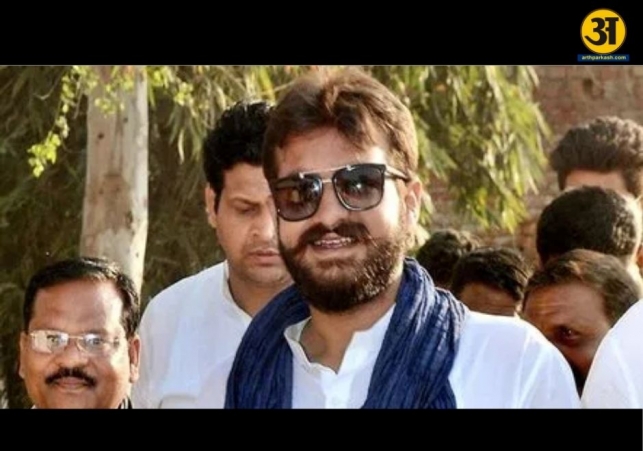
Abbas Ansari’s membership restored after HC relief
UP MLA Abbas Ansari’s membership restored after High Court relief in hate speech case
The Uttar Pradesh Vidhan Sabha Secretariat has restored the legislative membership of Abbas Ansari, the MLA from Mau constituency. This decision came after the Allahabad High Court set aside his two-year jail term, which was earlier handed down by the MP/MLA Special Court in Mau.
Abbas Ansari, son of the late gangster-turned-politician Mukhtar Ansari, had faced conviction in a hate speech case related to the 2022 Assembly elections. On May 31, 2025, the court in Mau found him guilty of making inflammatory remarks during his campaign speeches. He was sentenced to two years in prison and fined Rs 3,000. As per the law, once convicted, his membership in the Legislative Assembly was automatically revoked. On June 1, 2025, the state secretariat officially cancelled his MLA post.
Unhappy with this outcome, Ansari challenged the decision in the Allahabad High Court. After reviewing the case, the High Court overturned the verdict, which cleared the way for his reinstatement. Following this ruling, the Vidhan Sabha Secretariat on September 8, 2025, issued an order to restore his membership.
The development marks a significant relief for Abbas Ansari, who had managed to secure a win from Mau during the 2022 state elections despite strong political opposition. His case highlights how convictions in criminal cases can directly impact the political careers of elected representatives.
It is important to note that Abbas’s father, Mukhtar Ansari, was a controversial figure in Uttar Pradesh politics. He had a long history of criminal cases against him and was serving time in jail until his death from cardiac arrest earlier this year. Mukhtar’s legacy continues to influence politics in the state, and Abbas has often been viewed through the lens of his father’s reputation.
UP government builds flats on reclaimed land from Mukhtar Ansari
In a separate but related development, the Uttar Pradesh government has announced the construction of new residential flats on land that was once illegally occupied by Mukhtar Ansari in Lucknow. The land is located in the prime Dalibagh area of the state capital and was reclaimed by the Lucknow Development Authority (LDA) after being declared illegal possession.
According to officials, a total of 72 flats have been built on this reclaimed land. Each flat measures about 360 square feet and consists of two rooms, a pantry, a bathroom, and a balcony. These flats are part of four-storey apartment buildings constructed for the benefit of the public.
The state government has fixed the price of each unit between Rs 9 lakh and Rs 9.5 lakh. To ensure fairness, the flats will not be sold directly. Instead, they will be allocated through a lottery system. The Lucknow Development Authority is expected to issue an advertisement inviting applications from the public by the end of this month.
The housing scheme is aimed at supporting economically weaker families. Only individuals with an annual income of less than Rs 3 lakh will be eligible to apply. Officials said that this initiative is designed to make affordable housing available to those in genuine need, while also sending a strong message about the government’s stand against illegal property occupation.
The move to construct flats on land previously held by Mukhtar Ansari carries symbolic weight. It represents the state’s determination to repurpose properties that were once linked to criminal activities for the welfare of ordinary citizens. By converting the land into homes for low-income groups, the government is projecting a shift from criminal dominance to social development.
ALSO READ: Why CP Radhakrishnan deserves to be India’s next vice president
ALSO READ: EnteroMix cancer vaccine: Russia claims full effectiveness
Political and social significance
The twin developments—Abbas Ansari regaining his MLA membership and the government reclaiming his father’s land—reflect the complex intersection of politics, law, and governance in Uttar Pradesh. While Abbas has received relief from the courts, his political future remains under constant public scrutiny due to his family background.
At the same time, the government’s move to repurpose Mukhtar Ansari’s land shows its intention to highlight development and justice. For many citizens, the construction of affordable flats on land once controlled by a notorious gangster offers a symbolic victory of the rule of law over criminal influence.
These events are expected to influence political discussions in the coming months, especially as Uttar Pradesh continues to be a politically sensitive state. Abbas Ansari’s restored membership may give him a chance to rebuild his political career, but challenges remain. Meanwhile, the government’s welfare housing project could help it gain public approval and strengthen its narrative of good governance.
Together, these two developments underline how the legacies of past political figures and the decisions of courts continue to shape the present and future of Uttar Pradesh’s politics and society.
Related News